Would training air traffic controllers to identify a possible aircraft in distress help save lives?
Would training air traffic controllers to identify a possible aircraft in distress help save lives?
Dan Gryder and FlightChops started an amazing conversation about modifying training through a grassroots effort to work toward preventing the leading cause of the rash of relentless general aviation fatal airplane crashes: loss of control. Their video dives into how the airlines has been able to maintain a nearly impeccable safety record, and provides suggestions for a “AQP Flight Review.” For those not familiar with AQP, Advanced Qualification Program, it’s the way that most airlines handle recurrent training, initial qualification, and currency.
One important topic that was brought up was on the use of all available resources in an emergency scenario, specifically air traffic control. In the video, Dan and FlightChops play out an emergency that was pre-planned with the emergency services and controllers, which showed important lessons that could be learned should that situation happen.
Another interesting topic that was bought up was on air traffic control’s role in identifying possible aircraft in distress and their reaction to such. In the video, Dan instructs his student to turn off course while receiving VFR flight following. They were not assigned a heading, and were just flying in uncontrolled airspace en route to a destination. The maneuver was meant to see what air traffic control’s reaction was to the course deviation. As evidenced in the video, there were several different reactions… ranging from no response to a “are you in distress?” response. Due to the varying nature of the response, I felt this warranted a little investigation into what exactly controllers are trained to do. I don’t feel this was improper of them, they were merely changing course on their own as many of us do while flying VFR.
I talked to a friend, mentor, and air traffic controller who was knowledgeable on the subject. As a pilot and controller, he has received an Archi award for his work in saving a pilot’s life by talking him down through the clouds. While we wish that all controllers were this in tune to an aircraft emergency, the truth is that FAA order 7110.65, the governing rules for air traffic control, provides little guidance for identifying aircraft in distress. While the controller did state that controllers do receive some training on aircraft emergencies, it’s very minimal. Controllers are told that if the pilot sounds drunk, it may be hypoxia, but many controllers couldn’t tell you off the top of their head on what attitude hypoxia occurs. While they aren’t required to have this knowledge, it can still be helpful in saving a pilot’s life, which does go above and beyond what is required in FAA order 7110.65.
I asked him specifically what he would do if he noticed an aircraft deviating from course and altitude. He told me that if the aircraft was on a heading for traffic or in controlled airspace (such as Class B), that the pilot would be immediately queried and or provided a correction. However, if the aircraft was flying VFR and outside of any conflict, it is controller’s discretion since VFR flight following is an “additional service.” He said that some controllers will say something and ask if everything is OK, while some controllers won’t say anything since they are VFR. So the truth is that 7110.65 and controller training provides little guidance on how to deal with identifying aircraft emergencies, even though ATC is one of the MOST VALUABLE RESOURCES that a pilot can have in an emergency. Additionally, the emergency procedures that air traffic controllers are taught involve a checklist, such as asking for fuel on board, souls, and arranging emergency services. While many controllers are pilots and will go above and beyond, the official guidance is ambiguous and many controllers do not want to stray beyond the minimum as they could be named as a contributing factor should an accident occur.
So the long and short of this is that I believe that this concept warrants further discussion, and that by leveraging the valuable resource of ATC to identify aircraft in distress, we may just be able to help save lives.
We want your opinion… so what are your thoughts? Would training air traffic controllers to identify a possible aircraft in distress help save lives?
Keep reading
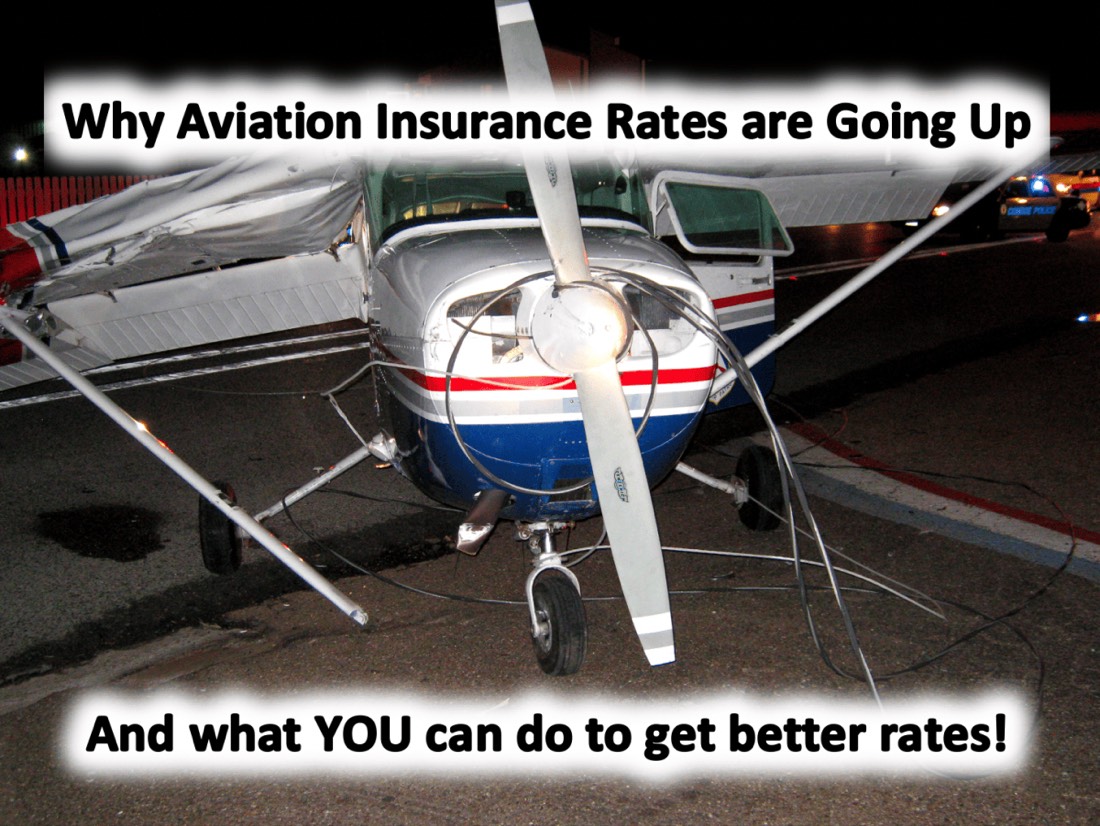
Why aviation insurance rates are going up and what YOU can do to get better rates
I recently did some research for an upcoming aviation safety presentation on the top 10 causes of aviation insurance claims. I had the opportunity to sit down with a…
Read · 2 min
How to Become a Ferry Pilot: 10 Steps
I have seen a lot of posts on social media recently about people looking to get into ferry flying. I did a video on this several years ago where I talked about how I got…
Read · 4 min
Supply and Demand and the Falling Value of Pilots
Supply and Demand and the Falling Value of Pilots Pilot Wanted: $10/hour! I was recently perusing some aviation related groups on social media to find that a particular…
Read · 5 min