
Always be Prepared – Cherokee 235 Engine Failure

From the archive: Sarah wrote this in 2016. Some details may have changed since.
Someone once quoted aviation as being “months of boredom punctuated by moments of terror”. Although this quote was initially written during WW1 to describe trench warfare, it has been adapted to describe the nature of aviation. Although most of the flights that most people experience are relatively tame and uneventful, every once in a while we are required to use the sum of our experiences and skill in order to make it out unharmed from an unfortunate situation.
The unfortunate situation began in September of 2016 after my business received a call about an aircraft that needed to be ferried from Tallahasse to Dallas. The story behind this aircraft was that the owner had been flying it himself and experienced engine problems which resulted in a forced landing in Tallahasse.The owner had described the engine as “surging” at about 45 minutes into the flight. The airplane was subsequently looked at by mechanics who thought they had found the problem based on the information given. The mechanics were able to find blocked fuel vents and a variety of other issues that were addressed and completed. The problem was that the symptoms that the owner experienced in the plane were not able to be replicated on the ground. The mechanics did a great job at working on it, and there was no indication of any problems after the work was performed.
After arriving at the plane in Tallahasse, I performed a preflight and review of the maintenance performed with the mechanics. I had the mechanics look at a few other issues and it was both of our opinions that the airplane was safe to fly. The plan was to fly the airplane over the top of Tallahasse and make sure that everything was running well before proceeding west. I took off and stayed over the top of the Tallahasse airport for about 45 minutes until heading west. The plane ran very well in the pattern and didn’t seem to have any problems.
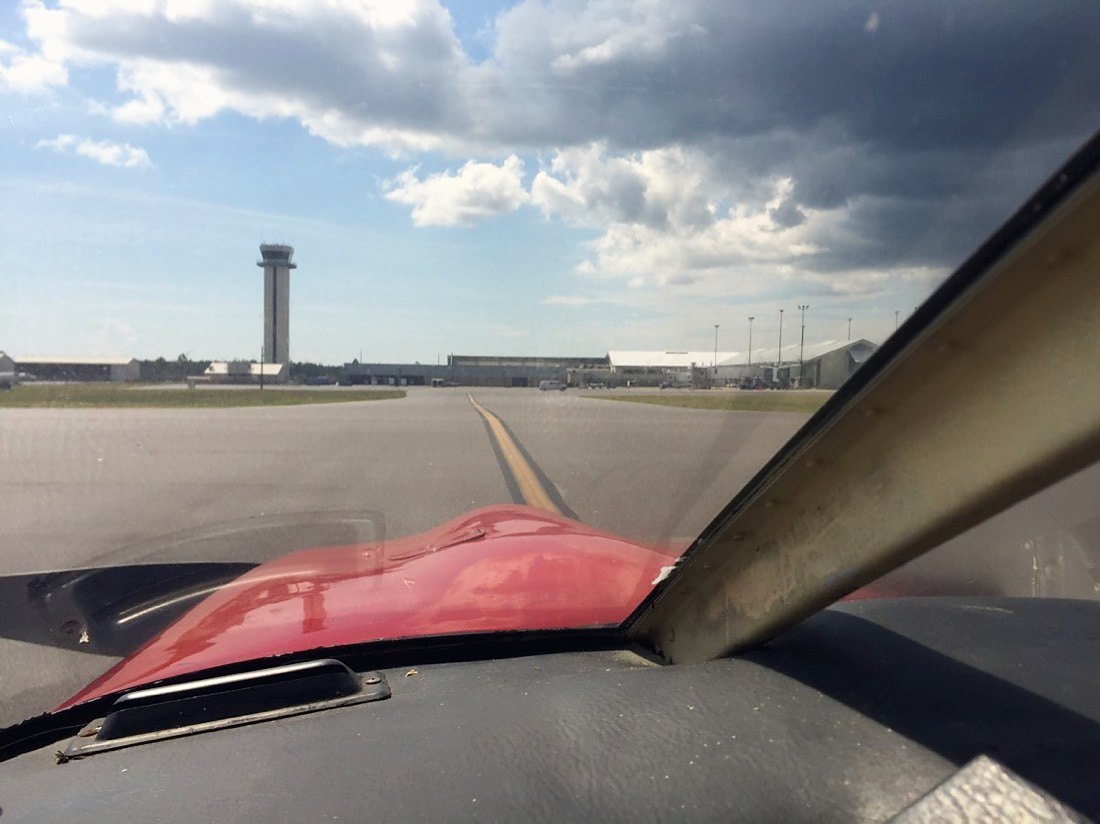
About 20 minutes into the flight and west of Tallahasse, I started feeling abnormal vibrations. I had leaned the airplane to 75 degrees rich of peak (peak was about 1575 average) and so I leaned it to about 1500 degrees. Oil temperature was normal and around 180 degrees and CHT around 380 which were still in the normal range. The fuel flow was reading about 13.5 at 2300RPM and 22in MP, which was normal for that power setting and altitude. A few min later it began detonating (which most often occurs when the mixture is too lean), and to my surprise the EGTs snuck up to 1600 without any changes in altitude or power setting. I richened the mixture to 1500 again and it seemed to go away for a little bit, although the fuel flow was higher than normal at about 14.5 gph. After another few minutes passed, the same thing happened again. I continued this same cycle a few more times until the fuel flow was reading 17gph and I had the EGT’s around 1450. Then the engine started vibrating again even with the lower EGTs. It almost felt like detonation or that it was “missing” or not firing quite right. It started to get progressively worse and by this time I was very close to Panama City. I told Air Traffic Control that I wanted to circle over Panama City while I worked out some issues with the plane. Right about that time oil started spraying on the passenger’s side front window and covered the window. I knew that time was limited with engine power and therefore decided to land immediately. I advised Air Traffic Control that I needed an immediate landing and they were more than accommodating with my request. They immediately switched me to tower and cleared me to land. I carried power in on the approach and when I touched down the prop stopped completely. I wasn’t sure if the engine quit on final or if it quit on the ground, but I was unable to restart it. The starter could not pull the prop over the compression stroke so I then called for a tug. I got to ride the tug to the FBO where we tied it down and contacted a maintenance shop to look at it.
An oil check afterward revealed a loss of a half quart of oil, but of course oil always looks to be more than it really is when it sprays. Just a quick glance showed oil on the right hand side of the prop hub and all along the right side of the cowling. There was some oil on the back side of the prop but I wasn’t able to tell if it was coming from the prop hub or elsewhere. I parked the plane and caught a commercial flight home and contacted the owner about what happened.
We can’t always predict when an engine failure will happen. If we could, then we would be able to avoid ever being in that situation. Nobody could have known what would have happened and we all did our best job to prevent it, but in the end physics will take its course. The lesson learned is to always be prepared for the worst. I fly both single engine planes and also jets, and when I’m in single engine planes I’m always looking and thinking about the best place to land in the event of an engine failure. In the jet we think about where to divert to and what to do in an emergency. No matter what you fly, the key to being prepared is having a mental plan of what to do. Whether that’s knowing the best glide speed and keeping situational awareness up in a 172 or knowing memory items in a jet, it’s important to always be ready in case danger comes knocking. Staying proficient with the procedures in whatever airplane you fly is key. Aviate-Navigate-Communicate is the phrase so often uttered by pilots, and it couldn’t be more true. In the end, we are all still here as pilots because we have been able to succeed at flying airplanes, and that is because we are well prepared for both the months of boredom and moments of terror.
Keep reading
The Aviation Inspiration of Kermit Weeks Fantasy of Flight
August 31, 2013 It all began when I was sitting in the Cessnas2Oshoksh tent during EAA Airventure 2013. I had been working with the Cessnas2Oshkosh on their training…
Read · 8 min
Engine Failure in the Northern Rockies of Canada
The mission was to ferry a Twin Comanche from Seattle to Alaska. I had been contacted by an organization that was looking to add a multi-engine trainer to their fleet.…
Read · 5 min
Arctic Crossing and Winter: Flying a Cessna 210 from the USA to Europe
The weather in the arctic regions is unlike anywhere else in the world. The winters feature intense freezing precipitation combined with extreme fronts and negative…
Read · 17 min